RS -485 Communication Cable.
#Twisted Shielded pair cable
#Netwoeking Cable
#Data Communication Cable
RS-485 is a widely used standard for serial communication in industrial and commercial applications. It is a balanced transmission standard that allows for reliable data transfer over long distances and in noisy environments. When it comes to RS-485 cables, there are a few key considerations:
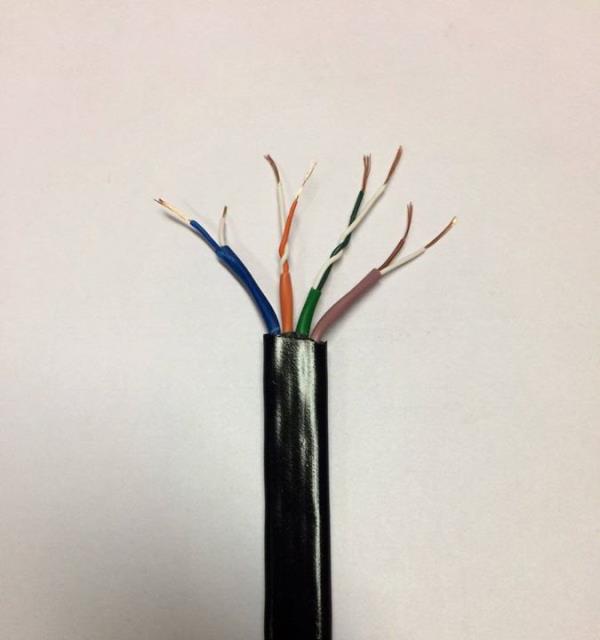
Cable Type: RS-485 can be used with different cable types, including twisted pair cables. Twisted pair cables consist of two insulated wires twisted around each other, which helps to reduce electromagnetic interference (EMI) and crosstalk. Common types of twisted pair cables used for RS-485 include shielded twisted pair (STP) and unshielded twisted pair (UTP) cables.
Wire Gauge: The wire gauge or thickness of the cables is an important factor to consider, as it affects the maximum distance and current-carrying capacity. Thicker wires (lower gauge numbers) generally have lower resistance and can carry more current over longer distances. The appropriate wire gauge will depend on factors such as the distance between devices, the required data rate, and the maximum current.
Impedance: RS-485 specifies a characteristic impedance of 120 ohms for the cable. It is important to use cables with the correct impedance to ensure proper signal transmission and minimize reflections. Most RS-485 cables come with an impedance of 120 ohms to match the standard.
#Twisted Shielded pair cable
#Netwoeking Cable
#Data Communication Cable
RS-485 is a widely used standard for serial communication in industrial and commercial applications. It is a balanced transmission standard that allows for reliable data transfer over long distances and in noisy environments. When it comes to RS-485 cables, there are a few key considerations:
Cable Type: RS-485 can be used with different cable types, including twisted pair cables. Twisted pair cables consist of two insulated wires twisted around each other, which helps to reduce electromagnetic interference (EMI) and crosstalk. Common types of twisted pair cables used for RS-485 include shielded twisted pair (STP) and unshielded twisted pair (UTP) cables.
Wire Gauge: The wire gauge or thickness of the cables is an important factor to consider, as it affects the maximum distance and current-carrying capacity. Thicker wires (lower gauge numbers) generally have lower resistance and can carry more current over longer distances. The appropriate wire gauge will depend on factors such as the distance between devices, the required data rate, and the maximum current.
Impedance: RS-485 specifies a characteristic impedance of 120 ohms for the cable. It is important to use cables with the correct impedance to ensure proper signal transmission and minimize reflections. Most RS-485 cables come with an impedance of 120 ohms to match the standard.
Keywords